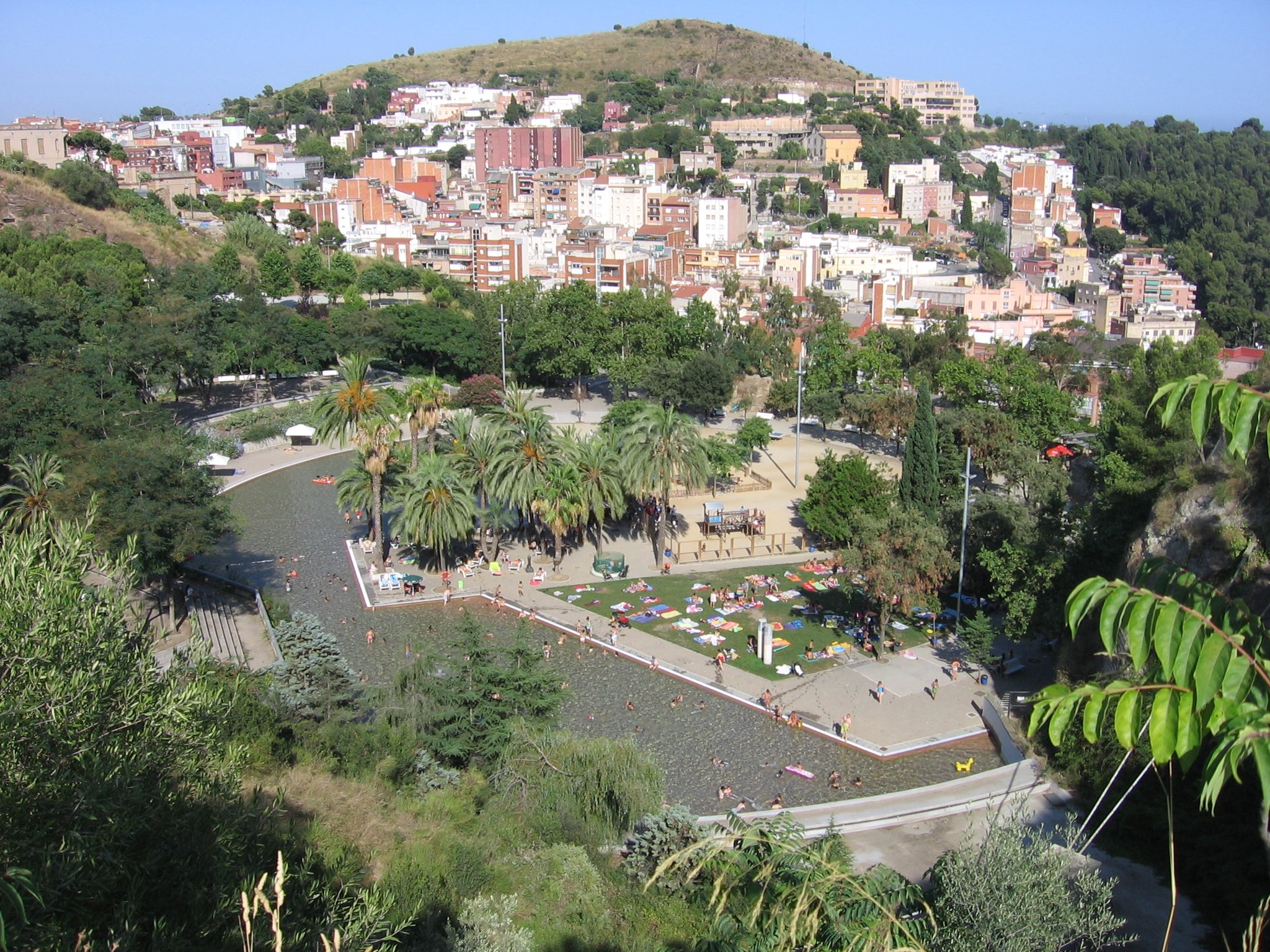
El Coll is one of the five neighborhoods that form the district of Gràcia, located between Vallcarca i els Penitents, La Salut, La Teixonera and El Carmel, the last two neighborhoods belonging to the Horta-Guinardó district.
Located three hundred meters above sea level, El Coll is a mountain area with little more than seven thousand inhabitants.
El Coll was an area that was frequently used by the noble people to hunt, but it was transformed into a residential area full of fine houses, in the beginning of the twentieth century. Shortly after, El Coll became the site of a “building fever”, having every single empty space occupied by new constructions.
Points of interest in El Coll
Table of Contents
Centre Civic El Coll – La Bruguera is a public establishment that offers services and activities for people of all ages. It is a space for social and cultural manifestation. Civic El Coll – La Bruguera occupies the building that once belonged to the Editorial Bruguera, a Spanish publishing house that was dissolved in 1986.
The neighborhood of El Coll is served only by the blue subway line (L5) that stops at El Coll|La Teixonera, though visitors can also use the green line (L3) to access the area, exiting at Vallcarca or Penitents.
Getting locked out or dealing with a broken key can happen to anyone — and…
Barcelona’s Mediterranean climate, with increasingly warmer and longer summers, makes air conditioning an essential feature…
Maybe you're thinking about selling a property or you've just inherited one or more real…
Do you enjoy strolling among trees and plants, away from the hustle and bustle of…
If you are planning to move to Barcelona for a few months or permanently, one…
ShBarcelona establishes itself as the leading agency within the Apialia Eixample Group, reaffirming its position…